
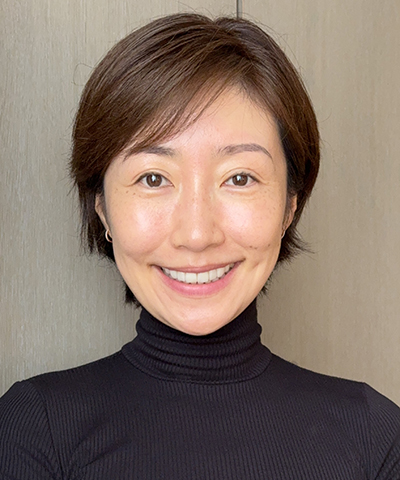
Lin Meng Walsh
Visiting Assistant Professor of Japanese
PhD, Stanford University, 2025
- Office Location
- 425 Lattimore Hall
Office Hours: By appointment
Biography
- PhD in Japanese Literature (with distinction), Stanford University, 2025
- MA in East Asian Studies, Stanford University, 2017
- BA in Asian Studies and Japanese, Pennsylvania State University, 2014
Research Overview
I am a scholar of modern Japanese literature and transnational East Asian literary cultures, with research interests in empire, genre, mobility, and the cultural politics of the Japanese colonial world. My work focuses on writers and cultural figures who moved across linguistic, national, and generic boundaries, asking how literary forms emerging from these contested spaces reshape our understanding of colonial power, political agency, and cultural exchange.
My current book project, If on a Manchurian Night a Traveler: Essayism and Fictionality in Manchurian Literatures, 1906–1945, examines the politics and poetics of the personal essay (Ch. suibi, J. zuihitsu) in the geopolitical and cultural contexts of Manchuria. Bringing Japanese and Chinese writers including Itō Sei, Ushijima Haruko, Tayama Katai, Gu Ding, and Xiao Hong into conversation, I argue that the essay’s aesthetics of fragmentation and candor provided a particularly flexible means of negotiating the unstable boundaries between lived experience and literary construction, as well as complicity with, and resistance to, colonial power. In doing so, the project demonstrates how essayistic writing became an important site for negotiating the contradictions of literary production under empire.
My developing research agenda extends these questions of empire, mobility, and mediation through a focus on women’s lives in Manchukuo and its aftermath. Current projects examine cultural figures including Sakane Tazuko, Yamaguchi Yoshiko, and Fujiwara Tei, alongside the national policy film (kokusaku eiga), repatriation literature (hikiage bungaku), and the media history of “continental brides” (tairiku no hanayome). Together, these projects investigate how women navigated—and were represented within—the institutions, media networks, and migration regimes of the Japanese empire.
My research has been supported by the Fulbright-Hays program, the Northeast Asia Council (NEAC), the Stanford Freeman Spogli Institute, the Foreign Language and Area Studies Program (FLAS), and the Nippon Foundation.
Research Interests
- Trans-Asia Comparative Literature
- The Essay (Ch. suibi, J. zuihitsu, K. sup’il)
- Manchukuo Literature and Cinema
- Women in East Asian Literature and Media
- Empire, Colonial, and Postcolonial Studies
Courses Offered (subject to change)
- JPNS 209: After the Quake: Introduction to Disaster Literature and Cinema in Japan
- JPNS 217: Snakes and Robots: The Non-Human in East Asian Literature and Media
- JPNS 225: Introduction to Women’s Literature in East Asia
- JPNS 226: I Am a Cat: Self-Writing in Japanese Literature
- JPNS 226: Texts of Confession: I-novel, Essay, and Autobiographical Writings in Japanese Literature
- JPNS 237: Shanghai, Tokyo, Seoul, Taipei: East Asian Metropolises in Literature and Film
Selected Publications
Book Manuscript
- If on a Manchurian Night a Traveler: Essayism and Fictionality in Manchurian Literatures, 1906–1945, in progress.
Peer-reviewed Articles
- “First-Person Plural: The Politics of Interperceptual Translation in Northeast Asia Travelogues by Tayama Katai and Wang Yuting,” Asia-Pacific Journal: Japan Focus, under review.
- “Diaries, I-novels, and Cats: Teaching the ‘Self’ in Japanese Literature and Media,” Education About Asia, under review.
Articles in Progress
- “Itō Sei’s Wartime Self-Portrait in Manshū no asa.”
- “Continental Brides: Literary and Media Representations of Japanese Women in Manchuria.”
Honors and Activities
- Northeast Asia Council (NEAC) Japan Studies Grant (2026)
- Stanford University John Wang Digital Fellowship (2026)
- University of Rochester Humanities Center Humanities Project Fund (2025)
- University of Rochester Faculty Professional Development Fund (2025)
- Fulbright-Hays Doctoral Dissertation Research Abroad (DDRA) Fellowship (2024)
- Stanford University Center for East Asian Studies (CEAS) Summer Grant (2023)
- Freeman Spogli Institute (FSI) Japan Fund Dissertation Grant (2022)
- Japan Society for the Promotion of Science (JSPS) Fellowship (2021, declined due to the Covid-19 pandemic)
- Stanford University Centennial Teaching Assistant Award (2021)
- Foreign Language and Area Studies (FLAS) Summer Award (2020)
- Stanford University Center for East Asian Studies (CEAS) Summer Grant (2018)
- Stanford University Asia Pacific Scholar Fellowship (2016)
- The Nippon Foundation Fellowship (IUC) (2015)
- Janssen Family Prize in Asian Studies (2014)