
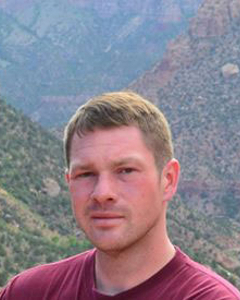
Thomas C. Devaney
Associate Professor of History
Senior Associate Dean, School of Arts & Sciences
PhD, Brown University, 2011
- Office Location
- 364 Rush Rhees Library
Office Hours: Lattimore 317G (please email jbathe@ur.rochester.edu for appointments)
Research Overview
Interests: Late medieval and early modern Europe; History of emotions; History of the senses; Urban history; Interfaith relations; Popular culture
In a broad sense, I’m interested in how ideas—ideas about religion identity, how one should behave, how society should be organized—played out in the real world. This has led me to explore a range of specific topics, including community, interfaith relations, public spectacles, popular religious practice, masculinities, and concepts of nobility. The geographic and temporal focus of much of my recent work has been late medieval and early modern Spain, but I have also addressed similar themes across the Mediterranean world, with articles on Venice, Cyprus, and Constantinople.
My first book, Enemies in the Plaza: Urban Spectacle and the End of Spanish Frontier Culture, 1460-1492, explores how cities were often conglomerations of smaller communities, creating composite societies that required various efforts to mitigate tensions and avoid internal conflict. In it, I examine how the conditions that prevailed in cities close to Castile’s border with Granada fostered a dissonant outlook toward religious minorities which I describe as an ‘amiable enmity.’ The resulting social anxieties left the populace vulnerable to attempts by elites to either deflect or exacerbate existing confessional tensions through public spectacle.
My current research examines the relationship between emotional experience and community solidarity in early modern Spain. I combine traditional understandings of community (as defined by a sense of belonging created by labelling others as “outsiders”) with new approaches developed by the history of emotions. My work particularly emphasizes the ways in which early modern people learned to define, shape, and interpret their emotional responses to events and how conceptions of the physical senses underpinned contemporary theories of emotion. This project contributes to the historical study of the emotions by proposing new methodologies for gauging the emotional experiences and understandings of ordinary people while clarifying the evolution of local religious practices during a period of major transitions in the everyday experience of Christianity, thus addressing key questions within Spanish historiography.
I have also begun a study of the career of Miguel Lucas de Iranzo, Constable of Castile in the mid-fifteenth century. By considering his life within the context of the political, cultural, social, economic, and religious developments of the period, I aim to highlight the intersection of individual experiences and of subtle, slow-moving cultural transformations during the period that set the stage for the momentous developments of 1492 and beyond.
Graduate Research Fields
I offer the following fields for the PhD qualifying examination: Early Modern Spain; History of Emotions and Experience; High and Late Medieval Europe; Early Modern Europe; Renaissance and Reformation; Early Modern Mediterranean. I also can work with students on more narrowly-focused fields. For more information on our MA and PhD programs, see our graduate program page.
I am accepting new graduate student advisees for our MA and PhD programs.
Courses Offered (subject to change)
- HIST 102: The West and the World to 1500
- HIST 105: Justice and Equality
- HIST 106: Witchcraft and Witch Hunts 1400-1800
- HIST 123: A World Reborn and Reformed: Early Modern Europe, 1450 - 1700
- HIST 324W: The History of Emotions
- HIST 325: Microhistory
Selected Publication Covers

Selected Publications
- Enemies in the Plaza: Urban Spectacle and the End of Spanish Frontier Culture, 1460-1492 (June 2015).
- “Blinded by the Light: Experience, Narrative, and Identity in late medieval and early modern Jaén,” The Journal of Medieval and Early Modern Studies 55.1 (2025):73-96.
- “Emotion and Conversion on the Early Modern Spanish Stage,” Mediterranean Studies 32.1 (2024): 43-50.
- “Sporting Time and Sporting Space,” in A Cultural History of Sport in the Medieval Age (600-1450), ed. Noel Fallows. Vol. 2 of A Cultural History of Sport, 6 vols. (London: Bloomsbury, 2021), 61-84.
- “Countering the ‘Heretics’: Miracle Books and Marian Devotion in Early Modern Spain,” in Golden Leaves and Burned Books. Religious Reform and Conflict in the Long European Reformation, ed. Gabriele Müller-Oberhäuser, Marjo Kaartinen, and Teemu Immonen (Turku, Finland: k&h, 2020), 187-218.
- “Everyday Miracles in Seventeenth-Century Spain,” in Lived Religion and Everyday Life through Early Modern Hagiographic Material, ed. Jenni Kuuliala, Päivi Räisänen-Schröder, and Rose-Marie Peake (London: Palgrave Macmillan, 2019), 189-213.
- “Virtue, Virility and History in Fifteenth-Century Castile,” Speculum 88.3 (July, 2013).
- “Spectacle, Community, and Holy War in Fourteenth-Century Cyprus,” Medieval Encounters 19.3 (2013): 300-41.
- “Competing Spectacles in the Venetian Festa delle Marie,” Viator 39.1 (Spring, 2008): 107-25.