
Short lightboard lectures on the mathematics behind geophysics: complex numbers, linear algebra, and the calculus of vector fields. Watch them before class, pause to work each step on paper, and come back to them when you review for homework and exams.
- Short videos, most 6 to 20 minutes
- Captions on the math lectures
- Free to watch, no login
How to use these lectures
Find your course
Each course lists the lectures to watch, in order. Instructors can link straight to a course’s list, for example #course=215.
The lectures
Start here
Why a short list of mathematical tools carries most of solid-Earth geophysics, and how the series fits together.
The tools this series builds, and where each one shows up in seismology, data analysis and planetary science.
Complex numbers
Waves and vibrations are easiest to describe with complex numbers. These lectures build the complex plane from scratch and end with the algebra used in Fourier analysis.
Real numbers sit on a line; complex numbers need a plane with a real and an imaginary axis. Why, with worked problems.
The imaginary unit i, the square root of minus one, and why a new class of numbers was needed at all.
Powers of 2 march out along the number line, while powers of i circle back: i, −1, −i, 1. Multiplying by i is a quarter turn.
Complex numbers as arrows with a length and an angle, and what that geometry does to multiplication.
Applications: complex exponentials turn oscillations and waves into algebra you can do by hand.
Linear algebra
Learning from data, from rock composition to imaging and machine learning, rests on systems of equations written as Ax = b.
Matrix–vector multiplication read as a combination of columns, leading to the column space, one of the four fundamental subspaces.
Vector calculus
The calculus of fields. Gradient, divergence and curl are introduced through Maxwell's equations and the elastic wave equation, then put to work on winds, pressure and sound waves.
Starts from Maxwell's equations and takes them apart, so each operator has a physical meaning before it has a definition.
Slopes along each axis, collected into one vector that points uphill.
Contours of a scalar field and the gradient that crosses them at right angles, toward the steepest increase.
A NOAA weather map: isobars, the pressure gradient, and why winds are strongest where isobars crowd together.
The pressure-gradient force from Newton's second law, and how gradients connect to conservation of energy.
Flux in and out of a small box: sources, sinks, and the divergence term in Maxwell's equations.
Newton's law and the pressure evolution equation combine into the acoustic wave equation.
Finishes the acoustic wave equation and collects the facts used along the way.
Circulation around a small square, and the curl as a cross product with the del operator.
How the three operators connect through del, and what each says about paths, surfaces and volumes.
Extra takes: Practice take: divergence (back soon) · Practice take: divergence and the electric field
Nature's Fury homework walkthroughs
Short lightboard walkthroughs recorded for Nature's Fury in spring 2021, when the course was EES 211. Each works a problem that is still on the EESC 111 homework. Three are presented by Scott Hull, then a PhD student in Miki Nakajima's group at Rochester.
Powers of ten for astronomical, planetary and economic numbers, from Avogadro's number to a billion seconds.
Core as the seed, mantle as the flesh, crust as the skin: how much of Earth's volume each layer holds.
Solar flux falls as 1/d² and temperature goes as power to the 1/4: what Earth's 300 K surface would be at half or twice the distance.
Presented by Scott Hull
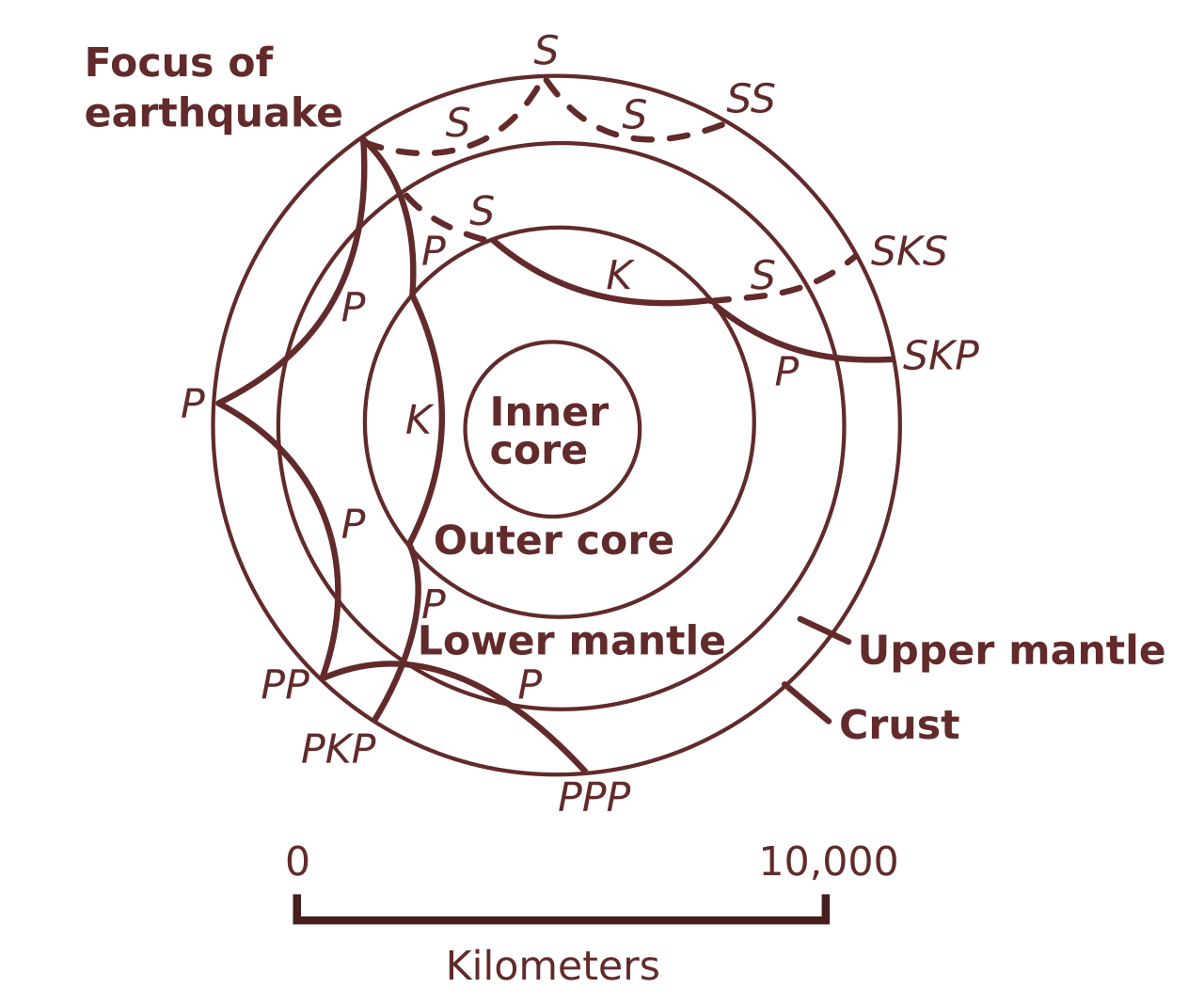
P waves outrun S waves, so the gap between their arrivals gives the distance to the epicenter; two stations narrow it down.
Presented by Scott Hull
Balance incoming sunlight against Stefan–Boltzmann radiation to find Earth's steady-state temperature.
Presented by Scott Hull
About the series
I recorded these lectures in 2021 under NSF EAGER award EAR-2042007, a collaborative project with Margarete Jadamec and Erasmus Oware (University at Buffalo) and Stefany Sit (University of Illinois Chicago) to build flipped, multimodal modules for upper-level geophysics.
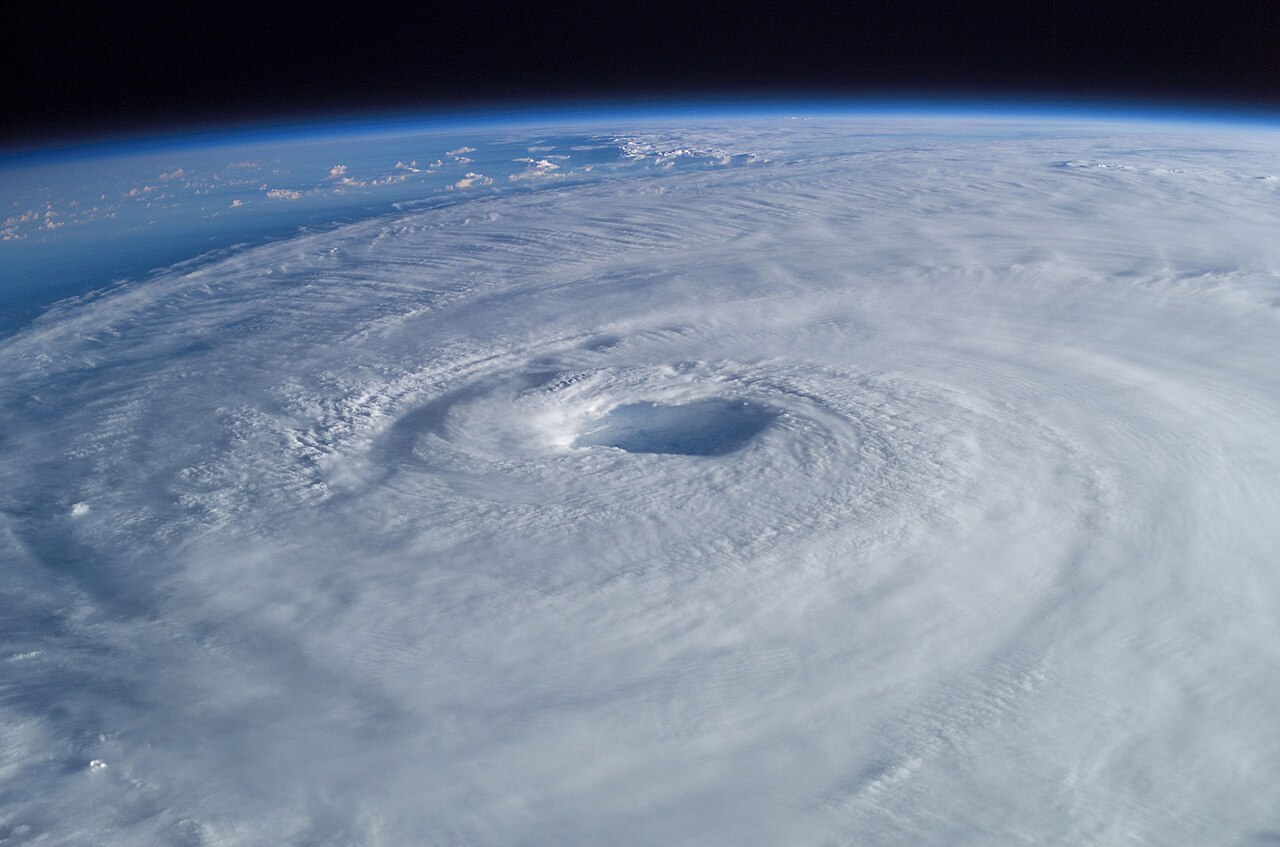
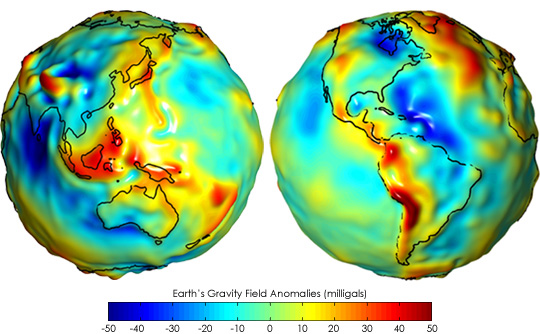
Videos are hosted on the University of Rochester’s Panopto. Course images: Hurricane Isabel from the International Space Station (NASA Johnson Space Center); Earth's gravity anomalies from GRACE (NASA); earthquake wave paths (USGS); InSight on Mars (NASA/JPL-Caltech). All public domain, via Wikimedia Commons. Updated November 2026.