

Dragony Fu explains the future of mRNA
Already before COVID, companies were in development making mRNA vaccines against HIV. The other category is autoimmune diseases,” he says. “That is intriguing because it’s verging beyond
Michael Welte explains the hidden role of lipid droplets in fertility and beyond
Within our cells are structures called lipid droplets that serve as storage units for energy in the form of lipids or fats. Because fat is an important energy source for cells and organisms, scientists had long assumed that lipid droplets had a straightforward role during egg production, as energy providers for the developing embryo.
Gorbunova and Seluanov explain how longevity gene from naked mole rats extends lifespan of mice
In a groundbreaking endeavor, researchers at the University of Rochester have successfully transferred a longevity gene from naked mole rats to mice, resulting in improved health and an extension of the mouse’s lifespan.
Welte and Kilwein crack the code of nutrient segregation
It is well known in developmental biology that a mother’s egg provides abundant nutrients that are essential for an embryo to develop. But does it matter where in the developing embryo the nutrients are stored?
Al Uy ventures to the Solomon Islands to discover how species originate
In the remote jungles of the Solomon Islands, where the songs of rare birds echo through the dense treetop canopy, professor of biology Al Uy has been on a quest to capture a fleeting moment—one that could help unlock the mysteries of evolution. Inspired by a concept coined by prominent evolutionary biologist Ernst Mayr, Uy is focused on what is known as the “moment of truth” in biology—the precise point where one species begins to split into two. As he observes and studies birds in their natural habitat, Uy offers a glimpse into the ongoing process of evolution, revealing how nature continuously shapes new species before our very eyes.
Gorbunova and Seluanov discover that strong immune systems and protection from genes are at play—and the findings could apply to human longevity
A new study that looks at why long-lived bats do not get cancer has broken new ground about the biological defenses that resist the disease.
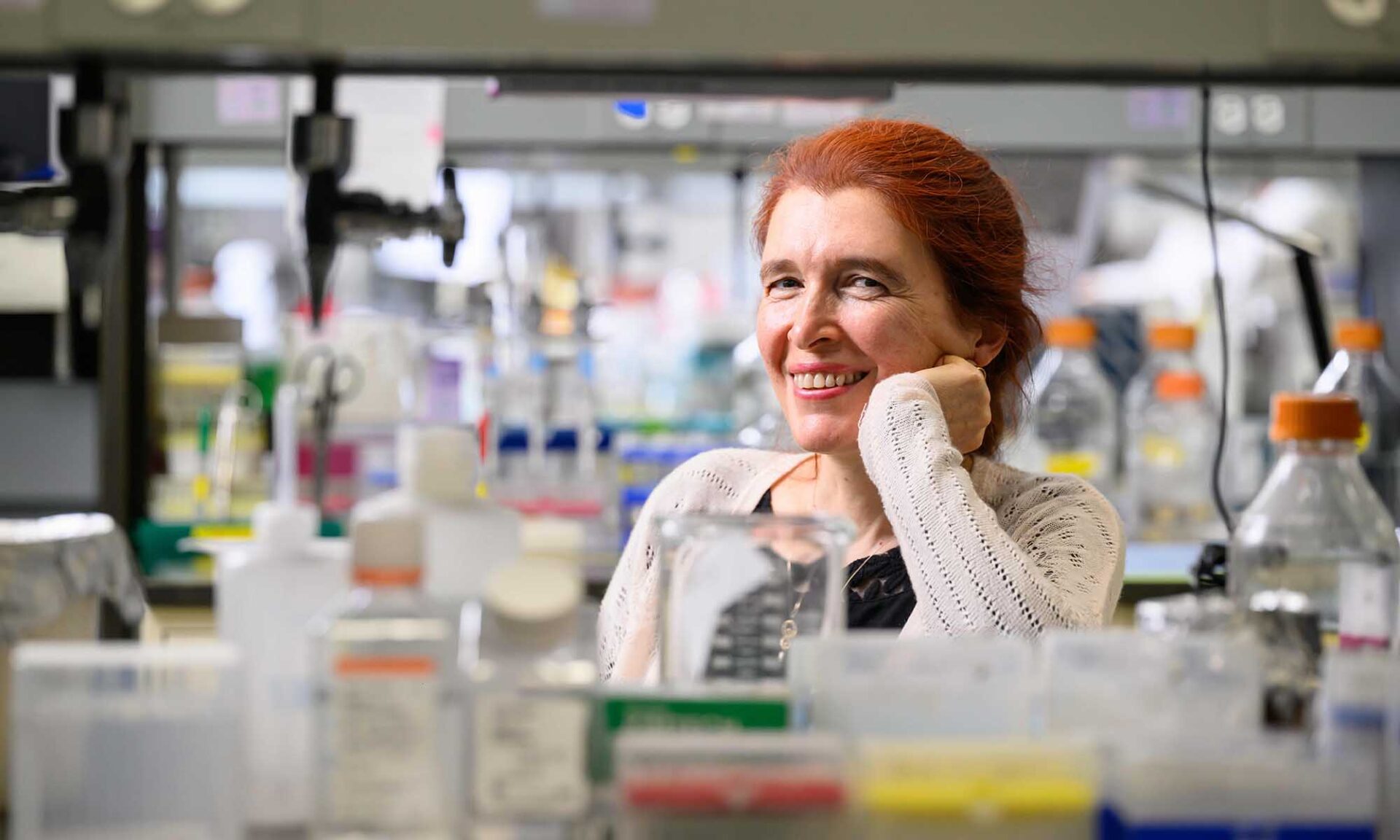
Rochester named site of research center to study the biology of aging
The University of Rochester will join the prestigious ranks of Nathan Shock Centers of Excellence in the Basic Biology of Aging, elevating its work to uncover biological mechanisms of aging and finding answers to leading longer, healthier lives.
The National Institutes of Health Division of Aging Biology awarded Rochester a five-year grant to establish the Upstate NY Comparative Biology of Aging Nathan Shock Center. Rochester will receive nearly $1 million annually beginning in 2025 to fund the center.
Justin Fay and colleagues compare two closely related species of yeast to understand how organisms cope with heat
In a study published in Molecular Biology and Evolution, University of Rochester biologist Justin Fay and his colleagues compared two closely related species of yeast to understand how organisms cope with heat and why some species manage it better than others. Proteins—the molecules responsible for most of a cell’s essential tasks—are especially sensitive to heat, and if they lose their shape, cells can fail. The researchers found that survival depends not only on how sturdy proteins are but also on the cellular environment that supports them. These insights could reshape how we think about evolution, disease, and life in a warming world.
Gorbunova Lab helps to explain why whales live for centuries
Gorbunova's team explores a cold-activated protein that mends damaged DNA.
Want to see more faculty headlines?
Click here to see more faculty news archives.